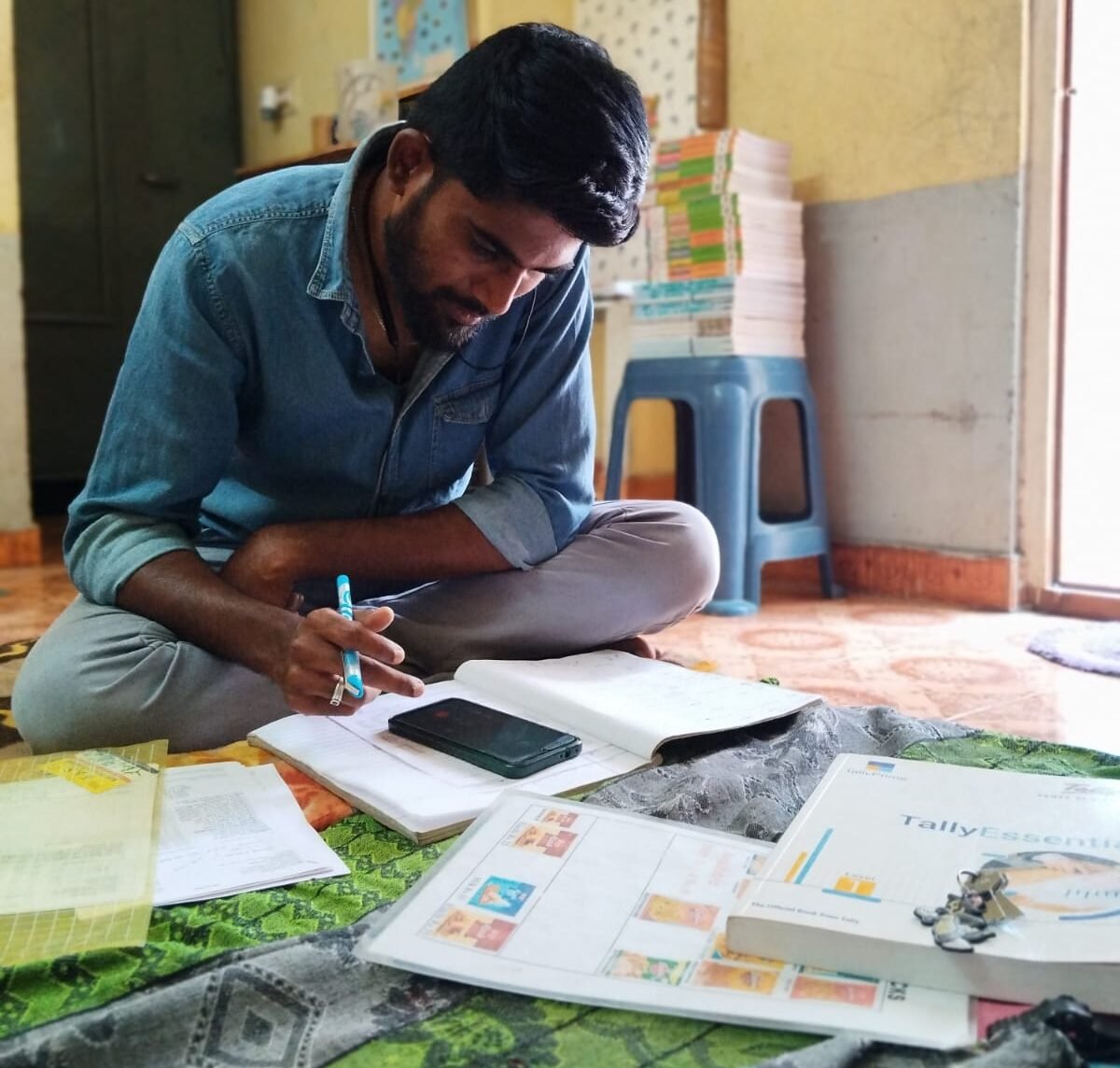
Mani Traders (FMCG) | Sales, Marketing & Logistics Coordinator | Coimbatore, Tamil Nadu | May 2023 – Present
When I joined Mani Traders in May 2023, we were a startup operating from a rental house with zero customers and a single-product focus. At that moment, it was difficult to imagine how far we would eventually grow.
Our business started as an exclusive wafer dealership for Parle. There was no established customer base, no predefined delivery routes, and no large workforce supporting operations. Everything had to be built from scratch.
Looking back today, this experience became much more than a job. It became my first real lesson in understanding how businesses grow, how customers build trust, and how systems become essential for sustainable operations.
Every day started outside the office rather than behind a desk. We visited grocery shops, bakeries, and mini marts directly to introduce our products and understand each business owner’s needs. Instead of relying on advertisements, we focused on direct marketing and face-to-face relationships.
Those early days taught me that customers are not acquired overnight. Growth happens through consistency, reliability, and genuine relationships.
Slowly, those daily interactions transformed into long-term business partnerships.
Today, we have built a network of more than 150 regular B2B customers that continue to support our growing distribution operation.
As the customer base expanded, we realized that depending on a single product would eventually limit our growth. We began introducing additional products based on customer demand and gradually expanded our portfolio from local products to established brands.
What started as a single-product dealership has now grown into a business distributing more than 70 products across six delivery routes.
One of the most rewarding parts of this journey was experiencing how businesses evolve when they listen to customers instead of simply focusing on sales.
Working in a startup environment also meant that job roles were never fixed. Our workforce consisted of only three people, so everyone contributed to every part of the operation.
A typical day could involve visiting shops, marketing products, taking orders, creating invoices, packing products, and coordinating deliveries.
This experience taught me something that I still apply today: every business function is connected.
Sales depend on logistics. Logistics depend on inventory management. Customer satisfaction depends on all these systems working together.
As the business continued to grow, we also began depending more on technology to keep operations organized. We used Vyapar for billing activities and Tally for inventory management, taxation, and business data handling.
This was one of my first exposures to how software can improve business operations.
At that time, I did not know that this experience would eventually influence my interest in Salesforce, business automation, and artificial intelligence.
Looking back now, I realize I was already learning many concepts that modern business technology professionals use every day. I was learning customer relationship management before I knew the term CRM. I was learning process optimization before I knew the term automation. I was learning data management before I started learning cloud technologies.
Today, when I study Salesforce and automation, I no longer see software as a collection of features. I see customers, workflows, and business challenges that need practical solutions.
That business-first perspective has become one of my greatest strengths.
This journey taught me that businesses are not built by products alone. They are built by trust, consistency, teamwork, and systems that improve over time.
Starting from a rental house and growing into a business serving more than 150 regular B2B customers will always remain one of the most valuable experiences of my career because it became the foundation that now supports my transition into Business Automation, Salesforce, and AI.