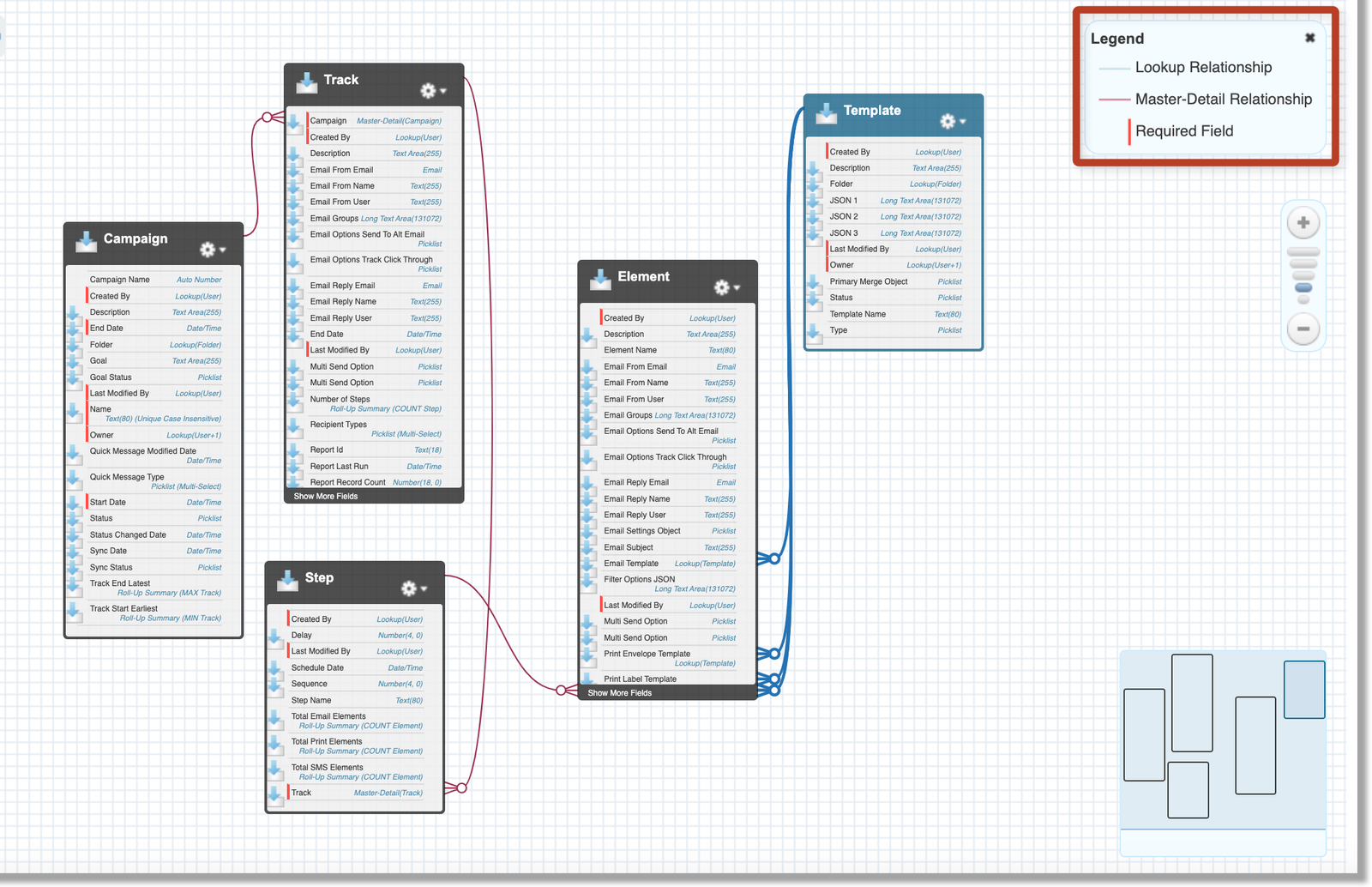
When designing an enterprise cloud application, standard out-of-the-box objects rarely fit the intricate needs of specialized B2B operations. To build a system that scales cleanly, you have to engineer custom relational models from the ground up.
The Structural Blueprint
A truly scalable database relies on a pristine relationship hierarchy. In my recent enterprise builds, I mapped out a custom architecture focusing on three core pillars:
- Standard Account Mapping: Setting up high-level parent companies with strict validation parameters to ensure data uniformity.
- Custom Cargo Arrays: Engineering bespoke tracking objects to handle multi-brand inventory profiles and destination routes.
- Strict Lookup Integrity: Structuring lookup relationships so that every automated update accurately anchors back to the parent file without data leakage.
Key Takeaway: Always invest time in your entity-relationship diagram (ERD) before configuring your fields. A clean data schema drastically reduces technical debt when you begin building your automation layers.
Blog 1 | 12-06-2026 | Suresh B